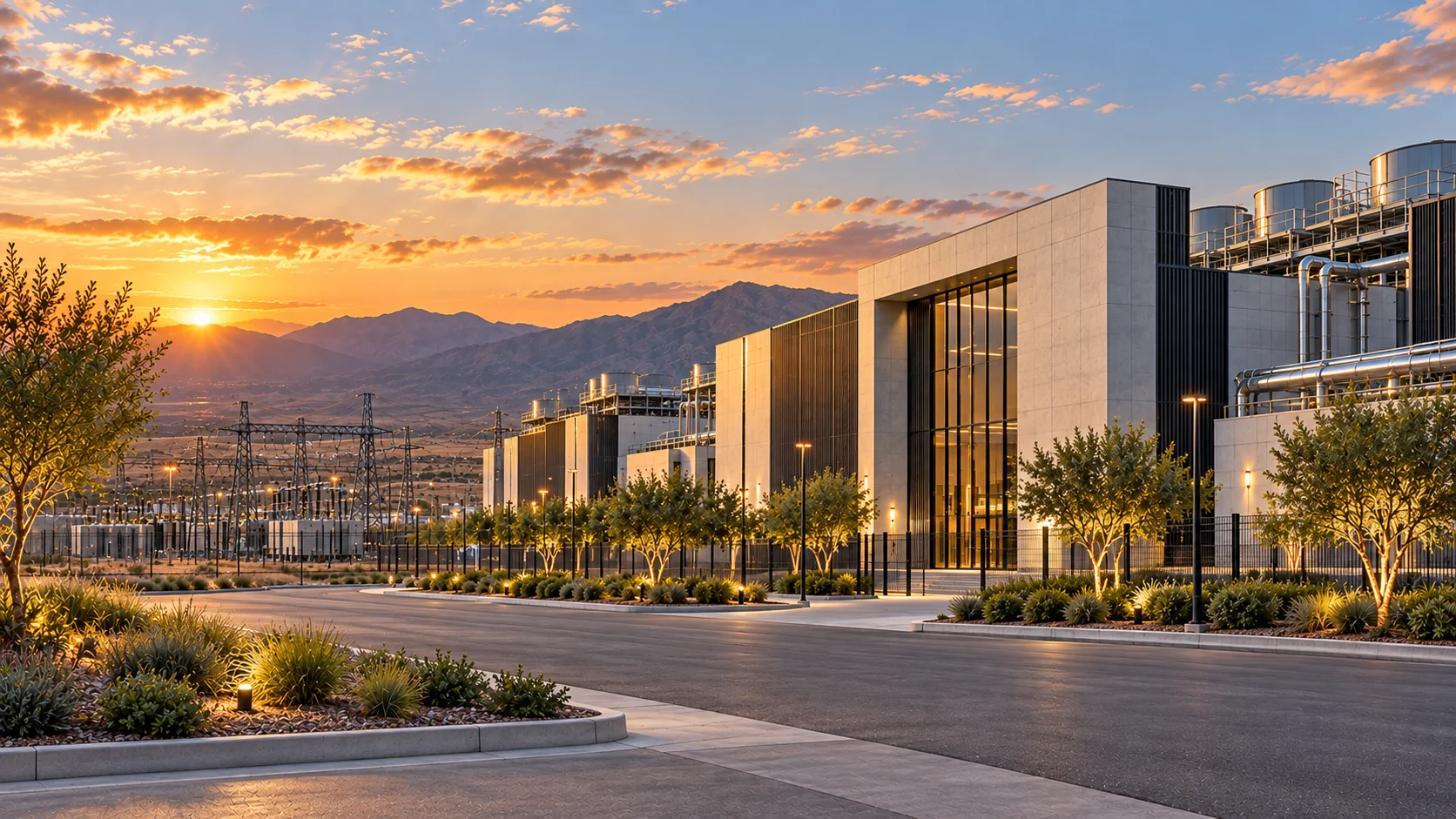
Behind every large model sits a growing network of data centres, chips, power systems, cooling equipment, fibre connections and construction projects. None of this is especially visible to the end user, but it is becoming central to how quickly AI can expand.
The pressure is already showing up in electricity demand.
The International Energy Agency projects that global electricity consumption by data centres could rise from around 485 TWh in 2025 to roughly 950 TWh by 2030. Electricity consumption from AI-focused data centres is projected to grow faster still. [1]
That matters because computing capacity cannot be added in isolation. New data centres need reliable power, grid access, cooling and increasingly specialised electrical equipment. In some markets, those constraints may become just as important as the availability of chips or computing hardware.
In the United States, Lawrence Berkeley National Laboratory estimates that data centres could account for around 12% of electricity consumption by 2030 in its reference case. That is a modelled scenario, not a forecast that is certain to materialise, but it gives a sense of the scale of change being considered. [2]
More than a data-centre story
The infrastructure behind AI extends well beyond the buildings themselves.
It includes semiconductors, transformers, power generation, cooling systems, fibre networks, construction capacity and energy storage. A delay in one part of that chain can hold up an entire project.
This is one reason the AI build-out is beginning to look less like a conventional software cycle and more like a broad industrial expansion.
Governments are starting to treat it that way too.
In July 2026, the European Commission launched a call for tenders to establish up to seven AI Gigafactories across Europe. The aim is to combine large-scale computing capacity with cloud infrastructure, high-speed connectivity and energy-efficient data centres. [3]
The significance goes beyond computing. AI capacity is increasingly being linked to energy policy, industrial competitiveness and technological sovereignty.
The economics are different
Physical infrastructure comes with a different set of risks from software.
Projects require large amounts of capital, long development timelines and reliable access to power. Their economics can shift with energy prices, financing costs, construction delays, utilisation levels and changes in computing technology.
Strong demand for AI does not automatically mean that every infrastructure project will work economically.
Scarce capacity may support project economics in some locations. Other projects may struggle if utilisation disappoints, technology improves faster than expected or too much capacity is built in the wrong place.
Location, power access, financing and technology choices will matter.
What changes from here
The next stage of the AI economy will not be shaped by software alone.
Electricity, physical assets, supply chains and capital allocation are becoming part of the same story.
The most visible companies may continue to be the ones building models, chips and cloud platforms. But behind them sits a much larger physical system, and that system will have to expand if AI demand continues to grow.
That may prove to be one of the defining features of the next phase of the AI cycle.